Pamukkale Wine Country: Vineyards, Çal Karası and the Çal Bağ Yolu Route
Pamukkale is a name you will find on wine bottles across Turkey — but not for the reason most visitors assume. The white travertine terraces have nothing to do with it. "Pamukkale" is also a Denizli winery, and the district around the travertines is a genuine wine-growing region with its own native grape. This page explains the two different places people mean when they say "Pamukkale wine", where each one actually is, how far they sit from the terraces, and how to visit them without inventing opening hours or prices that nobody publishes.
Quick answer: There is no winery inside Pamukkale village or the Hierapolis site. The two wine destinations are the Pamukkale Winery at Güney, about an hour north of Denizli city, and the Çal Bağ Yolu ("Çal Vineyard Route"), an oenotourism route built by four small producers up in the hills near Çal, roughly 45 minutes away. Both reward a car or a driver, especially if you plan to taste.
At a Glance
| Pamukkale wine fact | Detail |
|---|---|
| Two destinations, not one | Pamukkale Winery (Güney) and the Çal Bağ Yolu route (Çal) |
| Pamukkale Winery | At Güney, about 1 hour north of Denizli city — not in Pamukkale village |
| Çal Bağ Yolu | Four producers near Çal, in vineyards around 850 m above sea level |
| Native grape | Çal Karası, the local red of the Çal district |
| Getting there | A car or a driver is recommended; the Çal hills are about 45 minutes from Pamukkale |
| Best season | Harvest (bağ bozumu) in late summer and early autumn |
Two "Pamukkale Wines", Two Places
The confusion starts with the name. Pamukkale Winery ("Pamukkale Şarapçılık") is a Denizli producer based at Güney, a town north of Denizli city and well over an hour from the travertines. It is not a cellar at the foot of the terraces, and a wine tasting is not part of any Pamukkale ticket. Turkey's wine industry body lists the winery as founded in 1962 by Fevzi Tokat at Güney, still run by the Tokat family, with a capacity of roughly 4 million litres a year and exports to Germany and France since 1989; these figures come from that industry listing rather than from the winery's own website, which was unreachable when this page was checked. Its listed contact is Pamukkale Şarapçılık Pazarlama Ticaret A.Ş., Tilkilik Mah. 9. Sok. No: 30/A, 20460 Güney – Denizli (tel +90 258 451 20 24).
The second, and for a traveller the more visitable, wine story is Çal Bağ Yolu — a formal oenotourism route ("önoturizm rotası") created by four small producers in the Çal district: Erdel, Kuzubağ, Küp and Lermonos. The route runs its own website at calbagyolu.com, and it is this group, not the Güney winery, that most "Pamukkale wine tasting" day trips are built around.
So when you read "Pamukkale Winery", picture a large family producer an hour north, and when you read "Çal Bağ Yolu", picture a cluster of boutique vineyards in the hills. They are separate places in separate directions, and it is worth deciding which one you actually want before you set off.
The Çal Bağ Yolu Route
Çal Bağ Yolu is a self-guided route rather than a single visitor centre. Its own discovery list covers not only the four wineries but also Çal town itself, nearby ancient sites, the surrounding nature and local food, so you can build a half-day or a full day around it. For the food-and-village side of the district, see our guide to Pamukkale local culture and authentic experiences. The route's site says it launched in 2022 and dates its copyright from that year.
The draw is altitude and a grape you will not find in many other places. The Çal district sits at around 850 metres above sea level (Denizli city is only 428 m), and the native red here is Çal Karası, the local grape that gives the region its identity. The route's own website states that roughly 10% of the wine grapes grown in Turkey are Çal Karası — a claim worth attributing to the route itself rather than treating as a national statistic, but it tells you how central the grape is to the district's self-image.
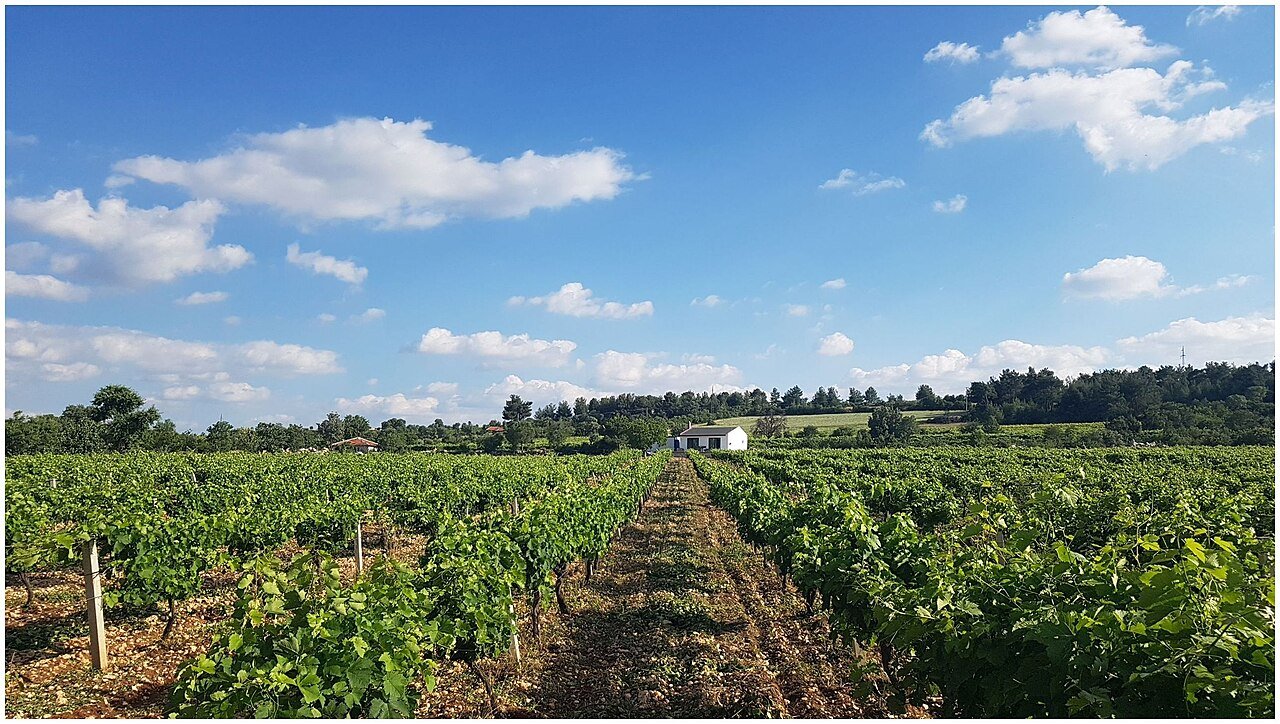
A vineyard in Denizli province, the region that surrounds the Çal wine district. Photo: CevatKaraman (CC0, public domain) via Wikimedia Commons.
Alongside Çal Karası, the district's vineyards are described locally as growing better-known Turkish and international varieties — Cabernet Sauvignon, Merlot, Shiraz and Chardonnay among them. Planting changes with the seasons and the individual estate, so if a particular variety matters to you, ask the producer you plan to visit rather than assuming a fixed list.
Getting There
Neither destination is walkable from the terraces, and this is the practical heart of any Pamukkale wine plan.
- The Çal hills are about 45 minutes from Pamukkale by road — treat it as an afternoon, not a stroll.
- Pamukkale Winery at Güney is roughly an hour north of Denizli city, in the opposite direction.
- Çardak airport is the closest air link to the Çal side, with the vineyards about 20 minutes from it.
- A driver matters. If you intend to taste, arrange a driver or a taxi rather than self-driving — the roads into the Çal vineyards are rural and the return leg is long.
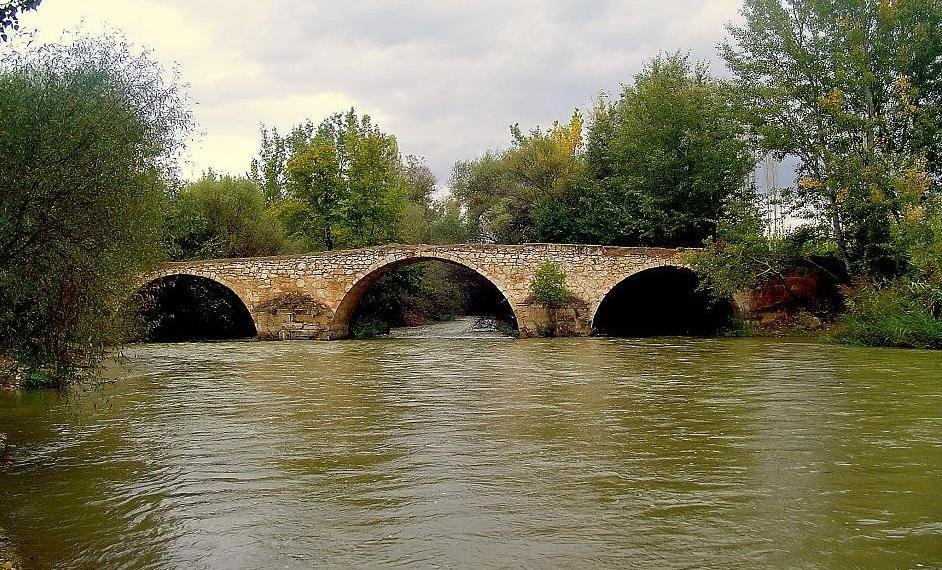
The Hançalar Bridge over the Büyük Menderes river at Çal, in Denizli province. Photo: Mr. Arif Solak (CC BY 3.0) via Wikimedia Commons.
If you would rather not drive at all, tastings are sold as organised experiences: "Winery and Pamukkale sunset" tours that include a tasting are bookable from Pamukkale and Denizli hotels. That is the simplest way to see the wine country without worrying about the car. For the wider transport picture, see our how to get to Pamukkale guide, and for the rest of the province see our guide to Denizli attractions.
When to Go
Wine here follows the agricultural calendar. Harvest — bağ bozumu — falls in late summer and early autumn, when the vineyards are at their most active and the region stages a harvest festival around early September. The exact dates shift year to year, so plan around the season rather than a fixed day.
Outside the harvest, spring is a pleasant time to drive the route, while winter leaves the vines dormant and bare — fine for a landscape drive, less so if you are hoping to see the vineyards in leaf. For how that fits the wider visitor calendar, see our best time to visit guide.
And if you would rather taste without leaving the towns, the bottles travel: Denizli's markets and the shops around Pamukkale sell local vineyard products and Pamukkale Winery labels, as noted on our what to buy page, and local restaurants build their menus around that heritage — see our Pamukkale and Denizli food and dining guide.
Frequently Asked Questions
Is there a winery in Pamukkale itself?
No. There is no winery inside Pamukkale village or the Hierapolis site. The Pamukkale Winery is at Güney, about an hour north of Denizli city, and the Çal Bağ Yolu producers are up in the hills near Çal, roughly 45 minutes away.
Do I need a car to visit the wine country?
A car or a driver is strongly recommended. The Çal vineyards are about 45 minutes from Pamukkale and the Güney winery about an hour north of Denizli city, and neither is served by a convenient walk from the terraces.
Can I taste wine without driving myself?
Yes. Organised "Winery and Pamukkale sunset" tours that include a tasting are sold from Pamukkale and Denizli hotels, which removes the driving entirely.
What is Çal Karası?
Çal Karası is the native red grape of the Çal district, the flagship variety of the Çal Bağ Yolu route and the reason the district has a wine identity of its own.
Is wine included in the Pamukkale entrance ticket?
No. The Pamukkale ticket covers the travertine terraces, ancient Hierapolis and the archaeology museum only. Wine tasting is a completely separate activity and a separate journey.
Sources & Verification
Altitudes for Çal, Çardak, Güney and Denizli are from the Turkish Ministry of Culture and Tourism's Denizli pages (denizli.ktb.gov.tr). The producer list (Erdel, Kuzubağ, Küp, Lermonos), the 2022 launch and the Çal Karası figure are from the route's own website, calbagyolu.com. Winery figures (1962, Fevzi Tokat, Güney, capacity and export history) are from the Turkish wine industry body's listing for the winery. Distances and seasons are given as approximations from regional guides and should be confirmed with the producers or the route before you travel. No tasting fee, opening time or festival date is published here because none is officially published.
Photographs: the Denizli vineyard image is by CevatKaraman (CC0 / public domain), the Hançalar Bridge at Çal image is by Mr. Arif Solak (CC BY 3.0); both are hosted on Wikimedia Commons and credited above and on our credits page. They illustrate the wider Denizli countryside, not a specific estate on the Çal Bağ Yolu.
Last verified: 27 October 2026.