Best Time to Visit Pamukkale: Month-by-Month Guide for 2026
Pamukkale's white travertine terraces look different in every season, and the month you choose shapes everything from how hot the stone feels underfoot to how many other visitors share the pools. The good news: the site is open year-round and the thermal water stays a constant 35-36°C (95-97°F) in every season. What changes is the air temperature, the crowds, the water volume in the terraces, and the photography light. This guide walks through each season and every month so you can pick the timing that fits your priorities.
Quick answer: The best months are April, May, September and October. These shoulder months deliver mild 18-28°C days, manageable crowds, warm barefoot travertine, and strong water flow. May and September are the two sweet spots; April and October extend the window at either end.
Quick Seasonal Overview
| Season | Months | Daytime highs | Crowds | Best for |
|---|---|---|---|---|
| 🌸 Spring | March-May | 8-22°C | Low to moderate | Photography, wildflowers, full water flow |
| ☀️ Summer | June-August | 30-40°C | Highest (Jul-Aug) | Long days, guaranteed sunshine, evening swims |
| 🍂 Autumn | September-November | 10-28°C | Moderate, easing off | Golden light, thinner crowds, comfortable walking |
| ❄️ Winter | December-February | 3-14°C | Lowest | Solitude, budget, steaming winter atmosphere |
Opening hours vary by season: Summer (roughly April to October) the site runs extended hours, typically 06:30-21:00. Winter (roughly November to March) hours shorten to about 08:00-18:00. Ticket sales stop roughly half an hour before closing. Confirm the exact hours for your travel date at the gate, as the schedule is set by the site management and can shift.
🌸 Spring (March-May): The Best Overall Window
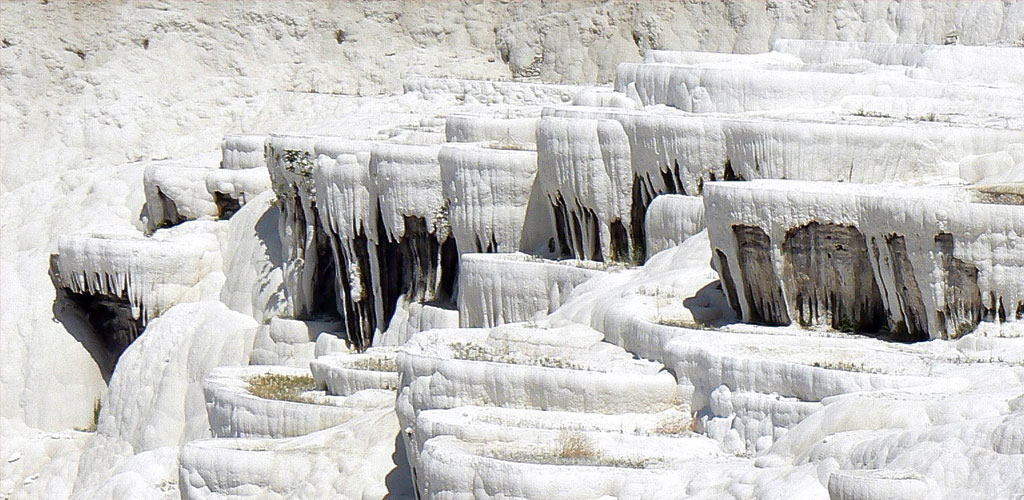
Spring is widely considered the best season at Pamukkale. Mild daytime highs of 8-22°C keep the barefoot travertine walk comfortable, the surrounding Denizli hills turn green and wildflowers bloom across the Hierapolis plateau, and winter rainfall has recharged the springs so the terraces run at their fullest. Crowds are manageable and build through the season, so March is quiet while May is busier.
March: The Quiet Start
Daytime highs sit around 8-16°C and nights can dip near freezing. The site is quiet, prices are at their lowest, and the terraces are whitest after the winter rains, but you will need warm layers and the walk can be cold underfoot on the dry upper sections. Good for travellers who prioritise solitude and budget over warm swimming weather.
April: Perfect Balance
Temperatures settle into the high teens to low twenties, the landscape greens up, and the travertine pools fill with bright turquoise water. Crowds are moderate, the air is comfortable for walking both the terraces and the Hierapolis ruins, and the photography light is excellent. April is the best early-spring choice.
May: Spring Peak
With highs in the low-to-mid twenties and long sunny days, May combines every favourable condition without a single serious drawback. Water flow is at its strongest after the spring recharge, the wildflowers are at their peak, and crowds have not yet reached summer levels. Along with September, May is one of the two best months of the year.
Spring tips: Bring a light jacket for cool mornings. Arrive right at opening for the quietest terraces and the softest light. Waterproof shoes or a bag for your footwear are essential, since walking the terraces barefoot is mandatory to protect the calcium formations.
☀️ Summer (June-August): Peak Heat, Peak Crowds
Summer is Pamukkale's busiest and hottest period. Daytime highs regularly exceed 30°C and push toward 38-40°C in July and August. The white travertine reflects and holds heat, so the stone surface can be painful on bare feet by midday, and coach groups from the Aegean coast arrive in large numbers, especially between 11:00 and 15:00. Summer is not the best season for comfort, but it is workable with the right timing, and it offers two things no other season does: guaranteed sunshine and very long days, with the site open until 21:00.
June: The Transition Month
Highs climb into the high twenties and low thirties. The terraces are still walkable early and late in the day, and crowds are noticeably lighter than July. If summer is your only option, June is the most comfortable of the three months.
July: Peak Intensity
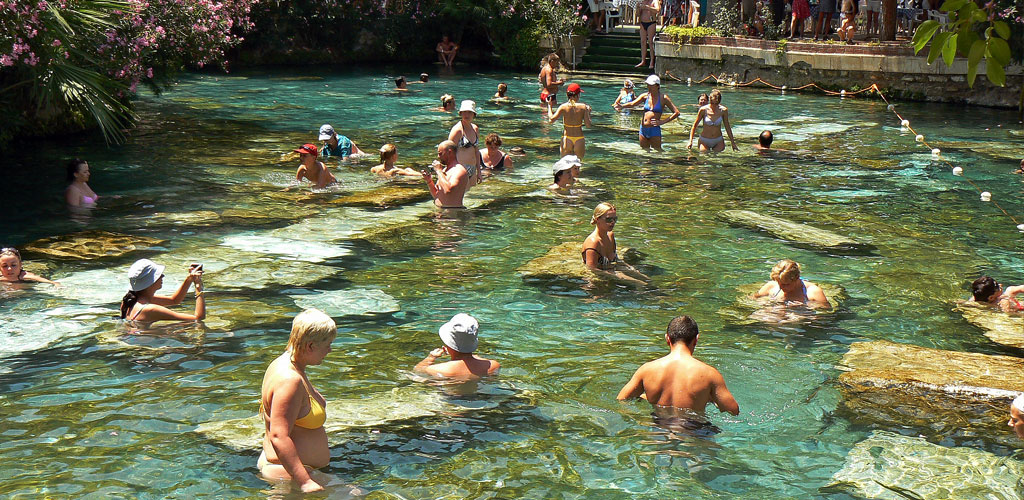
With highs around 35-38°C and almost no rain, July is the hottest and most crowded month. Arrive at the earliest gate opening and plan to leave by mid-afternoon, retreating to shade or Cleopatra's Antique Pool through the middle of the day. The pool, at a constant 36°C, is genuinely refreshing against the summer heat.
August: Peak Glory, Peak Strain
August matches July for heat and crowds, with the added pressure of European holiday travel. If you visit, the formula is unchanged: early morning on the terraces, the pool and the Hierapolis ruins through the heat of the day, and a return to the upper terraces for the cooler golden hour before closing.
Summer strategy: Arrive at opening (06:30 in summer) or after 17:00. Carry at least 1-2 litres of water per person, a hat and sunglasses, and sun protection. The thermal pool water is not drinking water. Book accommodation in Pamukkale village rather than Denizli so you can return to the terraces in the evening without a long drive.
🍂 Autumn (September-November): Golden Light and Thinner Crowds
Autumn mirrors spring's advantages and often exceeds it. Daytime highs settle between 10-28°C, the post-summer crowd retreats week by week, and the lower sun angle produces warm raking light that sculpts every basin rim and calcite ridge. The water flow remains strong from the summer months, and the Menderes valley slides into its harvest colours, framing the white terraces against golden fields.
September: The Best Month for Photos
Highs sit in the mid-to-high twenties, the sky stays dry and clear, and the terraces warm to an easy barefoot temperature through the middle of the day. September holds onto summer's warmth without its ferocity, and the coach traffic falls away. The autumn light is the season's signature, and September is arguably the single best month for photography at Pamukkale.
October: The Quietest Sweet Spot
Temperatures cool into the low-to-mid twenties, and the crowds that packed the site in August drain away completely. The travertine stays warm underfoot, the autumn clarity makes the white formations stand out sharply against the sky, and value improves as the high season ends. October is a close second to May for overall conditions.
November: The Shoulder Month
With highs around 12-18°C and increasing rain, November marks the transition into winter. The site is quiet and prices are lower, but wet conditions can make the terraces slippery, and some ancillary facilities reduce their hours. Best for budget travellers and photographers chasing mist and steam rather than sunlit pools.
Autumn tips: September and October need the same spring kit, minus the warm jacket. Weekdays are noticeably quieter than weekends even in these months. Book the later afternoon slot if you want golden-hour light without the early-morning chill.
❄️ Winter (December-February): Solitude, Budget and Atmosphere
Winter empties the site almost entirely. The coach traffic that fills the terraces in summer is gone, and a weekday winter visit can feel like having the place to yourself. The trade-off is the cold: daytime highs of 3-14°C, frequent rain, and the possibility of near-freezing mornings and light snow. The thermal water still flows at 35-36°C, so the pools remain swimmable, and the sight of steam rising off the terraces into cold air is one of the most atmospheric versions of Pamukkale you will ever see.
December: The Quiet Start
Highs sit around 4-11°C and the site is very quiet. Snow does occasionally fall on the terraces and does them no harm, creating striking white-on-white scenes. Water flow is reduced compared with spring, and some higher pools may run thin in dry years. Best for photographers and travellers chasing solitude.
January: The Coldest Month
With lows near or just below freezing, January is the coldest month. The initial barefoot walk on the dry upper terraces is genuinely cold, but once you reach the flowing channels the 35°C water warms your legs immediately. The changing rooms sit a short exposed walk from the pool, so bring a large towel or bathrobe and leave it close to the water. Use the South Gate, which sits close to both the travertines and Cleopatra's Pool, since the North Gate route is a roughly 2-kilometre walk across wind-exposed ground.
February: The Thaw
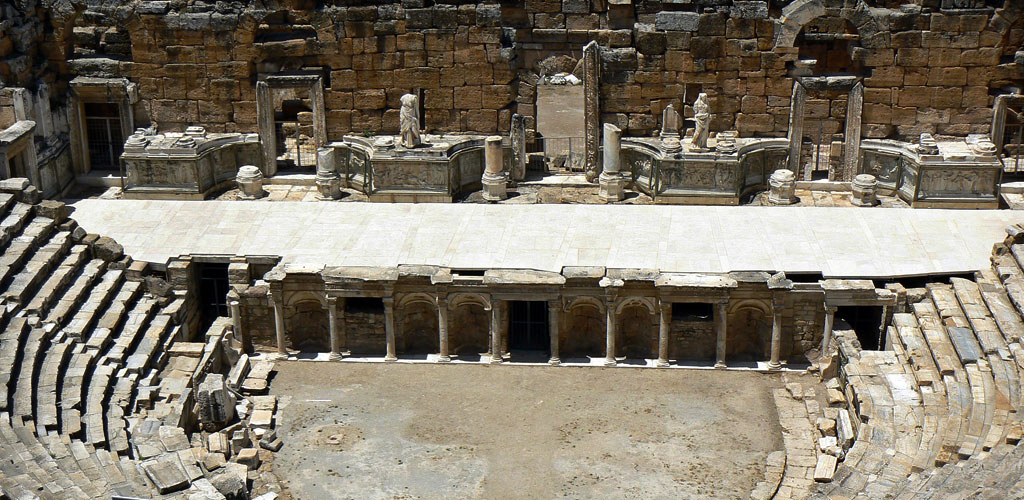
Similar to January but warming slightly, with highs reaching the low teens. Still very quiet and budget-friendly, and the Cleopatra Pool remains a warm haven. A good month for Hierapolis ruins exploration without crowds, though wet ground can make the stone paths slippery.
Winter strategy: Layer warmly and bring a waterproof bag for your shoes. Check the gate hours before you go, as winter closing is around 18:00 and ticket sales stop earlier. If soaking in hot water is the main goal, Karahayit, about 7 kilometres north, is worth the detour, though its terraces are red rather than white. Confirm the exact entrance fee for your travel date at the gate, as prices are set by the Ministry of Culture and Tourism and can shift during the year.
Best Time of Day, Whatever the Season
Time of day matters as much as time of year. Two windows consistently deliver the best experience:
- Early morning, right after the gates open. The softest light, the fewest other visitors, and the coolest travertine surface. In summer the earliest gate opens at 06:30, which also catches sunrise over the terraces before the first coach groups arrive around 09:00-10:00.
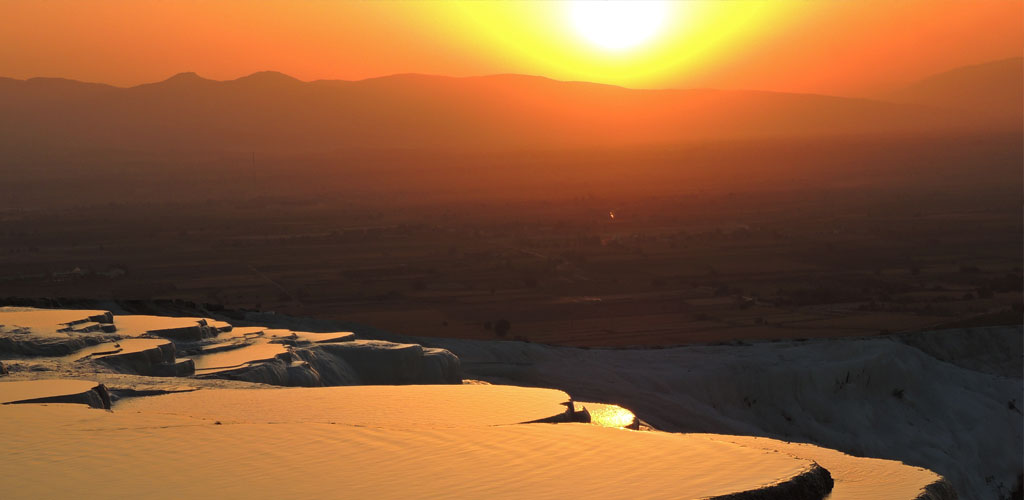
- Late afternoon, in the final hours before closing. Low-angle sunlight turns the white travertine warm gold and amber, producing the classic Pamukkale photographs. In summer the site stays open until 21:00, so you can catch both a quiet morning and a golden-hour sunset in the same day if you stay overnight in Pamukkale village.
The worst window is midday, especially in summer, when the harshest light, the hottest surface underfoot, and the peak concentration of tour groups all coincide. An overnight stay in Pamukkale rather than Denizli is the single best planning decision you can make, because it lets you enjoy both the morning and the evening without a long drive.
Practical Planning: Fees, Tickets and Hours
Entrance Fee
For 2026, the combined site ticket for foreign visitors is €30 (about $33 USD). This single ticket covers the travertine terraces, the ancient city of Hierapolis, and the on-site archaeological museum. There is no separate "terraces only" or "ruins only" option, and no cheaper evening rate. Payment at the gate is taken in Turkish lira at the day's exchange rate, by cash or card. The fee is set by the Ministry of Culture and Tourism and can shift during the year, so confirm the exact figure shortly before your trip.
Cleopatra's Antique Pool
Swimming in Cleopatra's Antique Pool is the only paid extra inside the gates and is not included in the €30 ticket. It costs approximately €6-13 extra, paid separately at the pool. The pool is a natural thermal spring at a constant 36°C, and its distinctive feature is the submerged Roman columns and architectural fragments deposited there by an earthquake in 60 CE. A Museum Pass does not make the pool free.
Opening Hours
Summer (roughly April to October): extended hours, typically 06:30-21:00. Winter (roughly November to March): shortened hours, about 08:00-18:00, with no evening visit. Ticket sales stop roughly half an hour before closing. The Antique Pool and the museum keep their own shorter hours within those windows, so plan to be through the gate well before the last entry.
Verified as of research date: The €30 combined ticket, the €6-13 Cleopatra Pool add-on, and the summer 06:30-21:00 / winter 08:00-18:00 hours were confirmed across multiple 2026 sources. Figures are set by the Ministry of Culture and Tourism and can change; confirm at the gate on the day of travel.
Packing and Preparation by Season
- Spring: Light jacket for cool mornings, waterproof shoes or a bag for footwear, sun protection, water.
- Summer: 1-2 litres of water per person, hat, sunglasses, high-SPF sun protection, and a plan to be on site early or late.
- Autumn: Same as spring, minus the warm jacket; a light layer for cooler evenings.
- Winter: Warm layers, a waterproof bag for shoes, a large microfiber towel or bathrobe for the pool, and slip-on footwear for the wet paths.
One rule applies in every season: walking the travertine terraces barefoot is mandatory, enforced by staff at all gates to protect the delicate calcium carbonate formations. Carry your shoes in a bag, go slowly, the surface is slippery, and falls are common.
Finding Your Perfect Pamukkale Season
There is no climatically bad time to visit Pamukkale, because the thermal water is 35-36°C year-round. The choice comes down to what you rank first:
- Weather comfort and manageable crowds: April, May, September and October.
- Guaranteed sunshine and long days: June, July and August, accepting the heat and the crowds by timing your visit for early morning and late afternoon.
- Solitude and budget: December, January and February, accepting the cold and the shorter hours.
Line up any shoulder month with a weekday and an early or late-afternoon arrival, and every lever that governs a Pamukkale visit points the same way: mild air, warm barefoot stone, flowing turquoise water, and room to walk.